Macomb and Oakland County
Kitchen remodeling across Macomb and Oakland counties
A real kitchen remodel in Sterling Heights, Rochester Hills, or Troy runs $35,000 to $130,000 depending on how much of the layout changes and what you put in it. Mike Murphy is a licensed Michigan builder who also holds an InterNACHI inspector certification, so he opens up your walls and plumbing before he writes the quote instead of after.
Kitchen remodeling
$35,000 to $130,000
Cosmetic refreshes start lower, around $18,000. Layout changes and electrical panel upgrades are what push a project toward the top of the range.
Licensed MI builder
#242500021
InterNACHI certified inspector
#NACHI20042907
Rated on Google
5.0 stars, 5 reviews
Serving
Macomb, Oakland, N. Wayne
Recent work
What these look like when they are done.
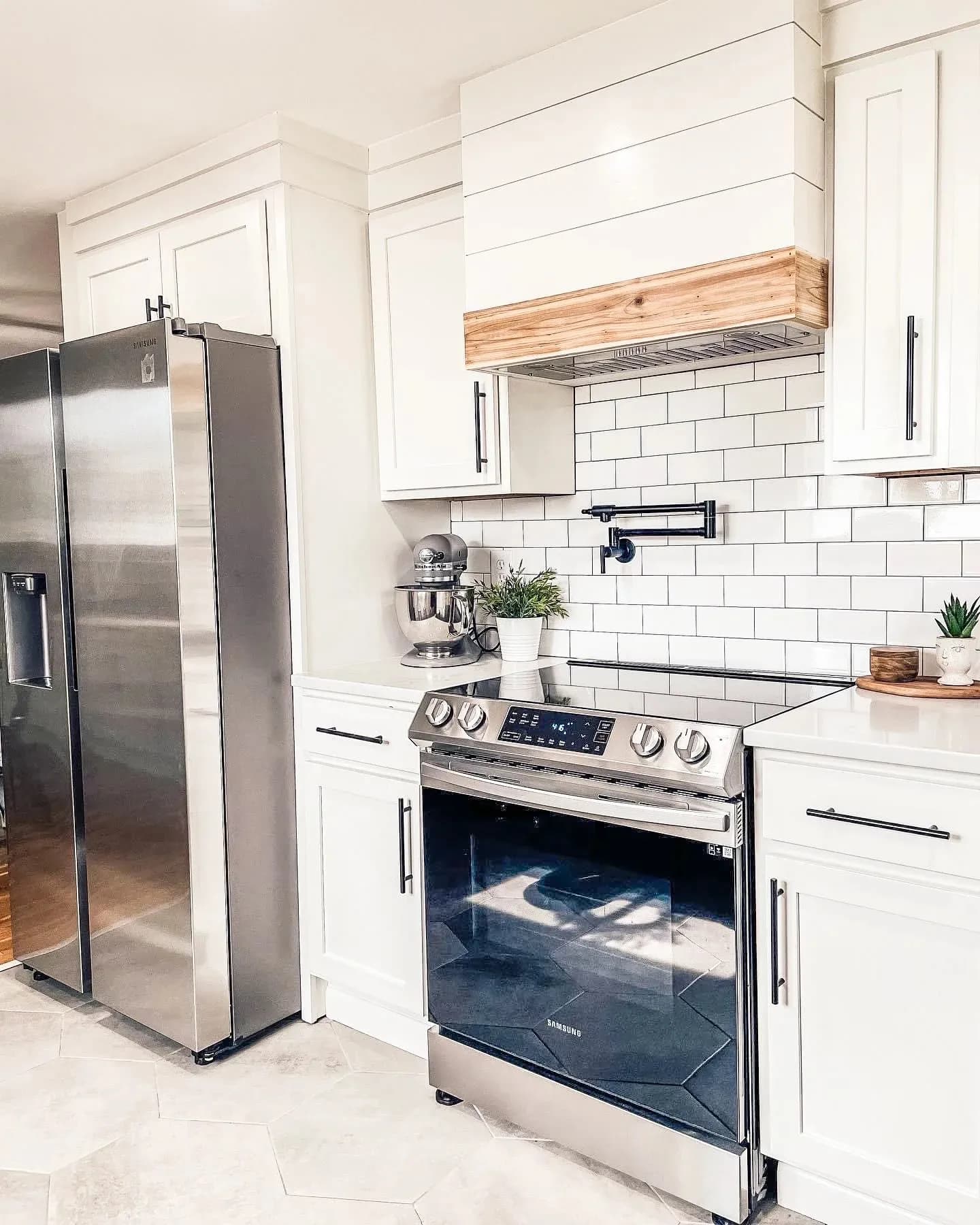
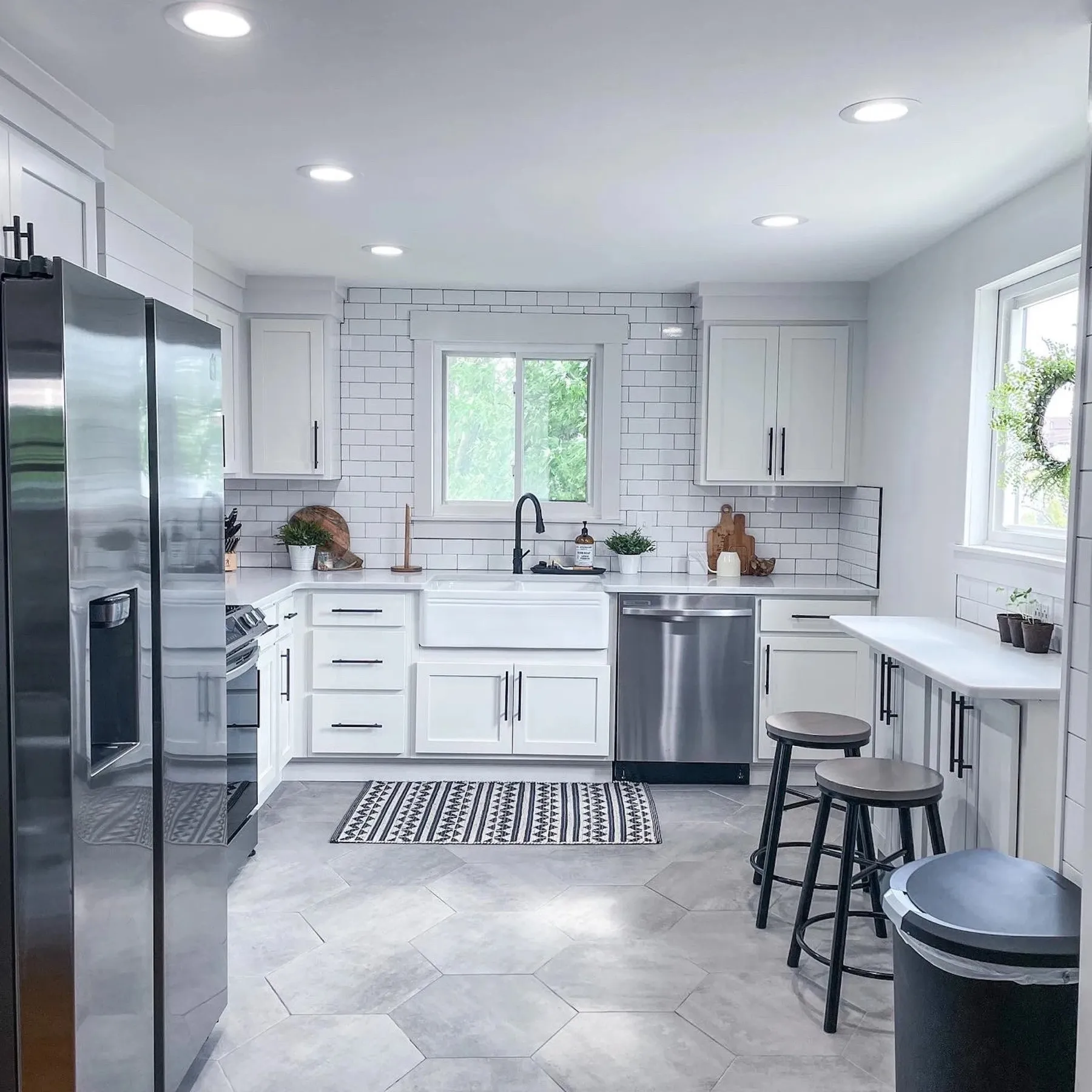
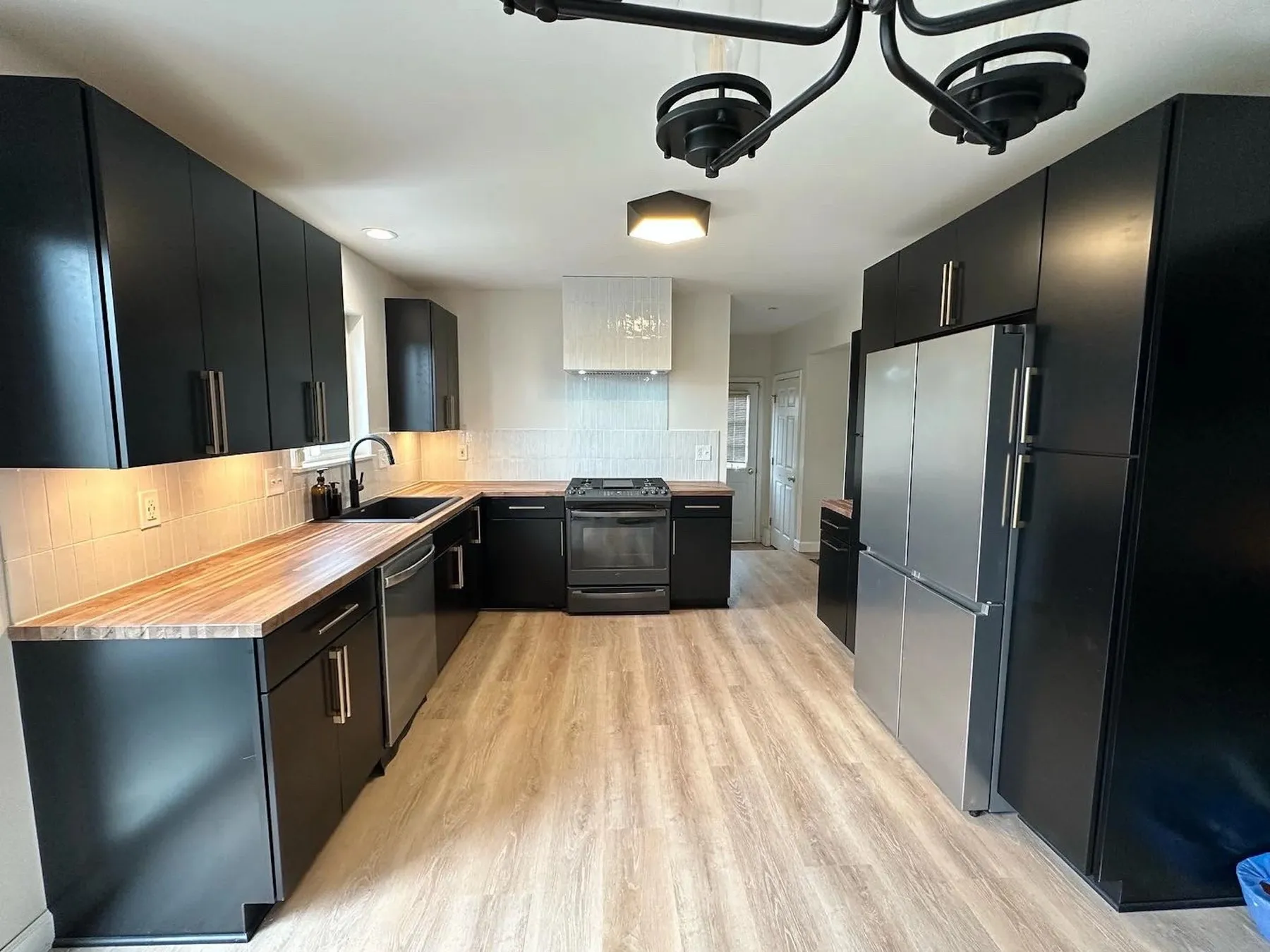
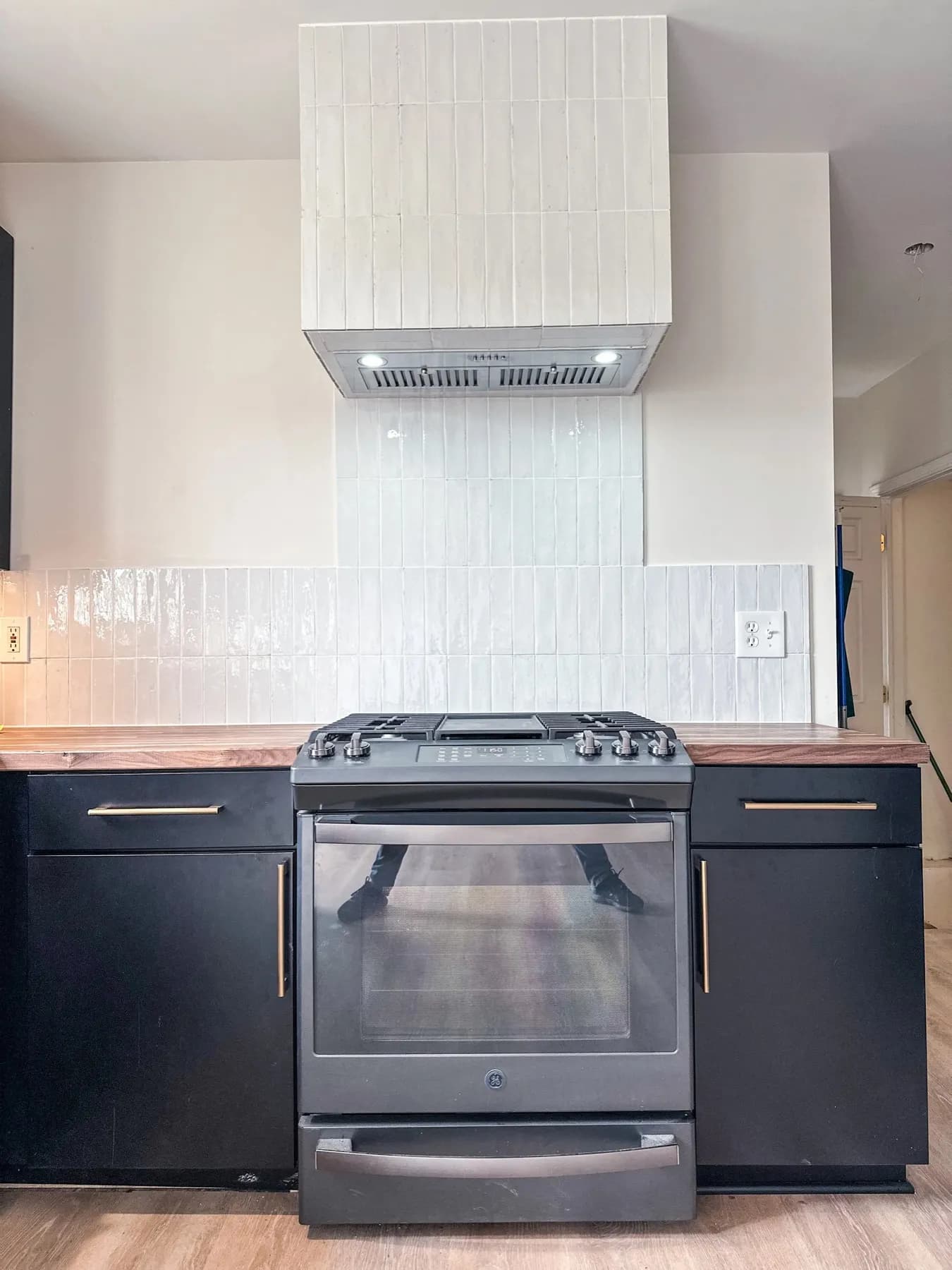
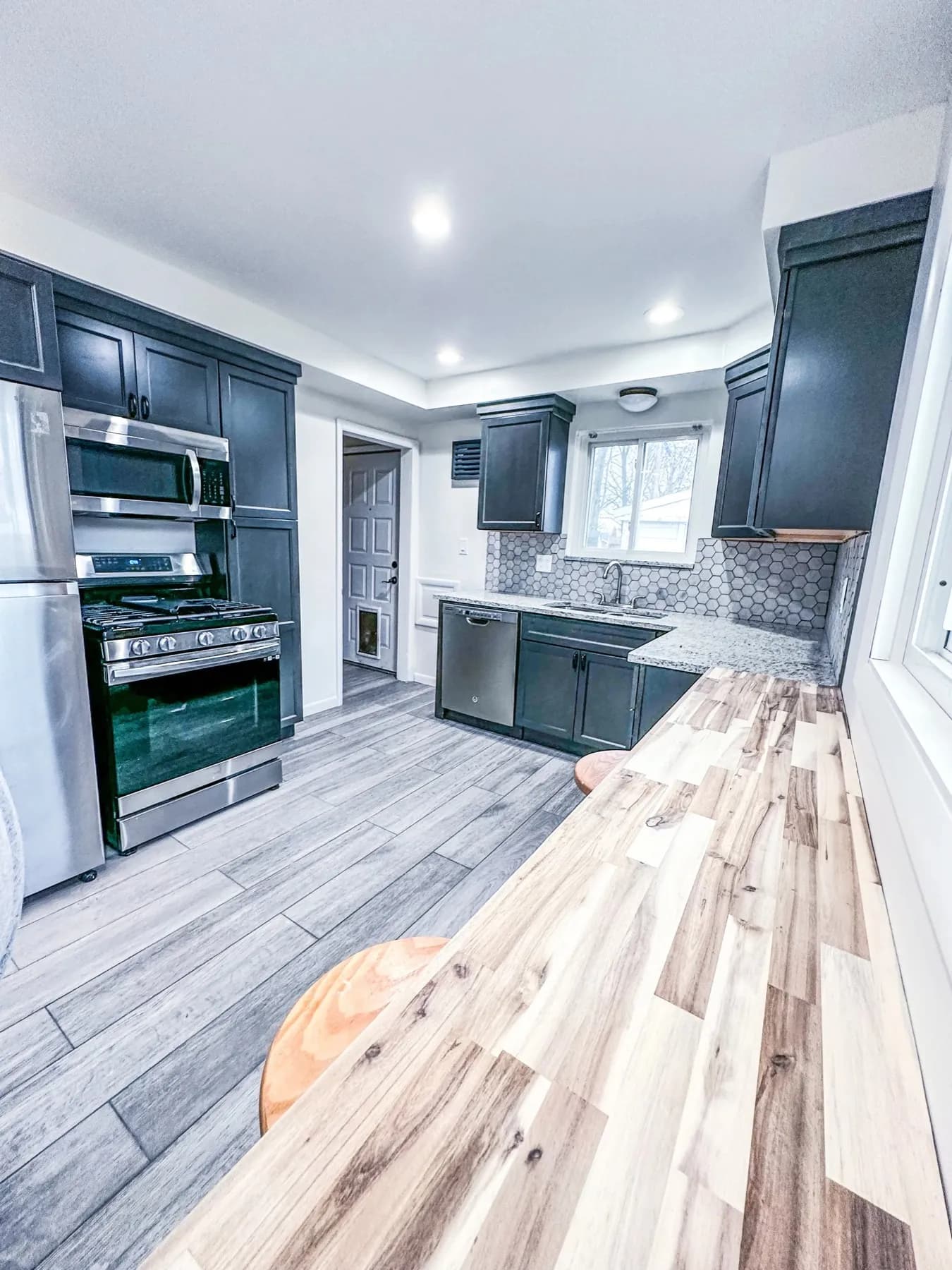
What a kitchen remodel actually involves
Most jobs start the same way: cabinets out, walls opened, and a look at what's actually behind them. That's the step a lot of homeowners get surprised by, because it's also the step where a contractor who isn't an inspector starts guessing. Mike spends his other work hours crawling through attics and basements as a certified home inspector. When he opens your kitchen wall, he already knows what 1960s Macomb County wiring looks like, what a galvanized supply line is about to do, and where a Sterling Heights ranch tends to hide a load-bearing wall.
A full remodel touches five systems: layout and framing, electrical, plumbing, cabinetry, and finishes. Layout changes (moving the sink, taking down a wall between kitchen and dining room, relocating the range) are the most expensive line item because they move plumbing and gas lines and usually require a permit review from the local building department. A refresh that keeps the existing footprint and swaps cabinets, counters, and appliances costs less and moves faster, because there's no rough-in work behind the walls.
Cabinetry is usually the single biggest cost, running 30 to 40 percent of the budget whether you go stock, semi-custom, or full custom. Counters (quartz is the default in this market now, granite still shows up, butcher block on islands) run a distant second. Appliances vary wildly depending on whether you're replacing like-for-like or upgrading to a range that needs a bigger gas line or a 220V run for an induction cooktop.
Realistic cost ranges for 2026
A cosmetic refresh (paint or reface existing cabinets, new counters, new backsplash, keep the same footprint and appliances) lands around $18,000 to $35,000 in Macomb and Oakland counties. That's below what we'd call a full remodel, but it's the honest floor for a kitchen that still looks and functions like new.
A full remodel with new cabinets, counters, appliances, flooring, and lighting, same footprint, runs $35,000 to $70,000. Move a wall, relocate the sink or range, or open the kitchen to an adjoining room and you're in $70,000 to $130,000 territory once you add structural work, rerouted plumbing, updated electrical panels, and often a new HVAC run. High-end finishes (custom cabinetry, natural stone, integrated appliance panels) push toward the top of that range or past it.
Two things move the number more than anything else: whether the layout changes, and whether the electrical panel needs an upgrade to support new appliances. Both get identified at the walk-through, not discovered mid-project, which is the entire point of having the person quoting the job also know how to inspect a house.
Timeline
A cosmetic refresh takes 2 to 4 weeks. A full remodel with the same footprint runs 6 to 10 weeks. A remodel that moves walls, plumbing, or structural elements runs 10 to 16 weeks once you count permit review time and cabinet lead times, which in 2026 are still running 6 to 10 weeks from order for semi-custom lines. Custom cabinetry can push that further. We build the cabinet order into the schedule on day one instead of waiting until demo is done, because that lead time is usually the longest single item on the critical path.
Permits in Macomb and Oakland counties
Kitchen remodels that touch electrical, plumbing, or structural framing need permits from the local building department, whether that's Sterling Heights, Rochester Hills, Troy, or wherever the house sits. A cosmetic refresh that doesn't move plumbing or add circuits usually doesn't require one. We pull the permits, schedule the inspections, and are on site for them. If a project needs a variance or a zoning review because of an addition or bump-out, we handle that application too. You never have to call the building department yourself.
What commonly goes wrong, and how it gets avoided
The most common failure mode in this market is the mid-project change order: the contractor opens a wall, finds knob-and-tube wiring or undersized plumbing nobody accounted for, and the price jumps 15 to 30 percent with no warning. That happens because most contractors quote off a walk-through and a guess. Mike's inspector background means he's trained to spot the signs before demo, not during it. He'll tell you up front if your panel is likely undersized for a new range hood and induction cooktop, or if 1970s poly-B plumbing is probably behind that wall, and price it into the estimate instead of into a change order.
The second most common problem is subcontractor turnover, where a homeowner ends up managing three different trades who've never worked together and don't agree on the schedule. We run one crew accountable for the whole job, and Mike is the one on site, not a rotating project manager.
What's included, what's not
Included in every kitchen quote: demo and haul-away, framing and drywall work, electrical and plumbing rough-in and finish, cabinet installation, counter templating and install, backsplash, lighting, and final trim. Not included by default: appliances themselves (we'll spec and order them if you want, but the units are billed at cost), and any structural engineering fees if the layout change requires a stamped plan, which some load-bearing wall removals do in Michigan depending on span. We flag that possibility during the estimate, not after signing.
Kitchen Remodeling questions we get
Is $10,000 enough for a kitchen remodel?
No, not for a real remodel in this market. $10,000 covers paint, hardware, a new faucet, and maybe a backsplash, which is a real refresh but not a remodel. New cabinets alone typically start around $12,000 to $15,000 for a mid-size kitchen. If $10,000 is the ceiling, we'd scope a cosmetic update rather than call it a remodel, and we'll say so plainly at the estimate.
What's the most expensive part of a kitchen remodel?
Cabinetry, usually 30 to 40 percent of the total budget. After that it's labor for electrical and plumbing rough-in, especially if the layout is changing. Counters and appliances matter, but cabinets are the line item that moves the total the most.
How much does a kitchen remodel cost in Michigan?
In Macomb and Oakland counties, a full remodel runs $35,000 to $130,000 depending on scope. A cosmetic refresh that keeps the same layout and appliances runs $18,000 to $35,000. Statewide averages you'll see online are often national numbers with Michigan's cost-of-living discount applied, which undersells what quality cabinetry and licensed trade labor actually cost here.
How long does a kitchen remodel take?
2 to 4 weeks for a cosmetic refresh, 6 to 10 weeks for a full remodel that keeps the existing layout, and 10 to 16 weeks if walls, plumbing, or the electrical panel are moving. Cabinet lead times are usually the longest single factor, so we order them on day one.
Do I need a permit to remodel my kitchen in Michigan?
If the work touches electrical, plumbing, gas lines, or structural framing, yes, and it has to come from the city or township building department where the house is located. A straightforward cosmetic update (new cabinets in the same spots, new counters, paint) usually doesn't need one. We pull whatever permits the job requires and handle the inspections.
Should I move the kitchen sink or keep it where it is?
Keeping the sink, range, and major plumbing in place is the single biggest cost lever in a kitchen remodel. Moving the sink means rerouting drain and supply lines, often through a slab or joists, which adds real labor and sometimes a permit review. It's worth doing if the current layout genuinely doesn't work, but it's not something to do just because it looks better on a mood board.
Also worth reading
The rest of what we do.
Where we work
Cities we cover most.
Want a real number on your kitchen remodeling?
Mike walks the space, looks behind it, and writes you a scope with the line items visible. Free, and there is no sales sequence after.